As a 22-year old raised in the Church and educated in
Christian institutions for my entire life, including college, I have a great
deal of many feelings towards a great deal of many topics. When I look at the
Church today, I am indeed as concerned as every other Christian author,
blogger, Facebooker and Tweeter about a number of seemingly problematic beliefs
that are beginning to manifest themselves in the Christian community. Some of
these may be categorized as liberal and others may be categorized as
conservative, but it is clear that the political polarization that is occurring
in Washington has done its damage to the American Church.
One of the most dangerous and erroneous beliefs is how Christians are starting to view charity. In a sense, political apathy and the ascension of libertarian thought into mainstream political discourse have begun to negatively influence the political philosophy of many of our brothers and sisters in Christ. We are seeing more and more Christians in public life assert that social injustices can be remedied entirely by the Church and that the government should have no role in addressing them.
Representative Paul Ryan is one of the better-known public figures who espouses this sentiment. He shared the theological foundation behind his views in May 2013 at Benedictine College by once more expressing that private institutions like the Church should take the place of “big government” in addressing poverty in our society. In particular, the potential 2016 presidential candidate states that the issue with government efforts to tackle this epidemic is that “[t]o truly help the poor, we have to help the ‘whole’ person – not just the material needs, but the spiritual ones too.”

Now, if he were asserting that the state cannot be the only institution addressing the needs of the poor, the Congressman would be correct. Pope Emeritus Benedict XVI even agrees with Ryan, a Catholic, by stating: “Wherever politics tries to be redemptive, it is promising too much. Where it wishes to do the work of God, it becomes, not divine, but demonic.”
 View of the outside world from atop St. Peter's Basilica.
However, in a seeming critique of materialism, Ryan moves in the opposite direction and favors a relationship between the body and soul that holds the two in distinct and separate categories. In particular, he asserts that “government can’t give [spiritual] help because…[i]t treats everyone the same…[s]o we need to look for people outside of government [to give this help].”
It is necessary to question Ryan’s understanding of physical
and spiritual poverty as mutually exclusive concepts. There are of course rich
people who are poor in spirit and poor people who are rich in spirit. However,
the congressman’s characterization here and his wider economic views indicate that
government efforts to address systemic poverty are in vain because the state,
through social programs, cannot address the needs of those in spiritual poverty
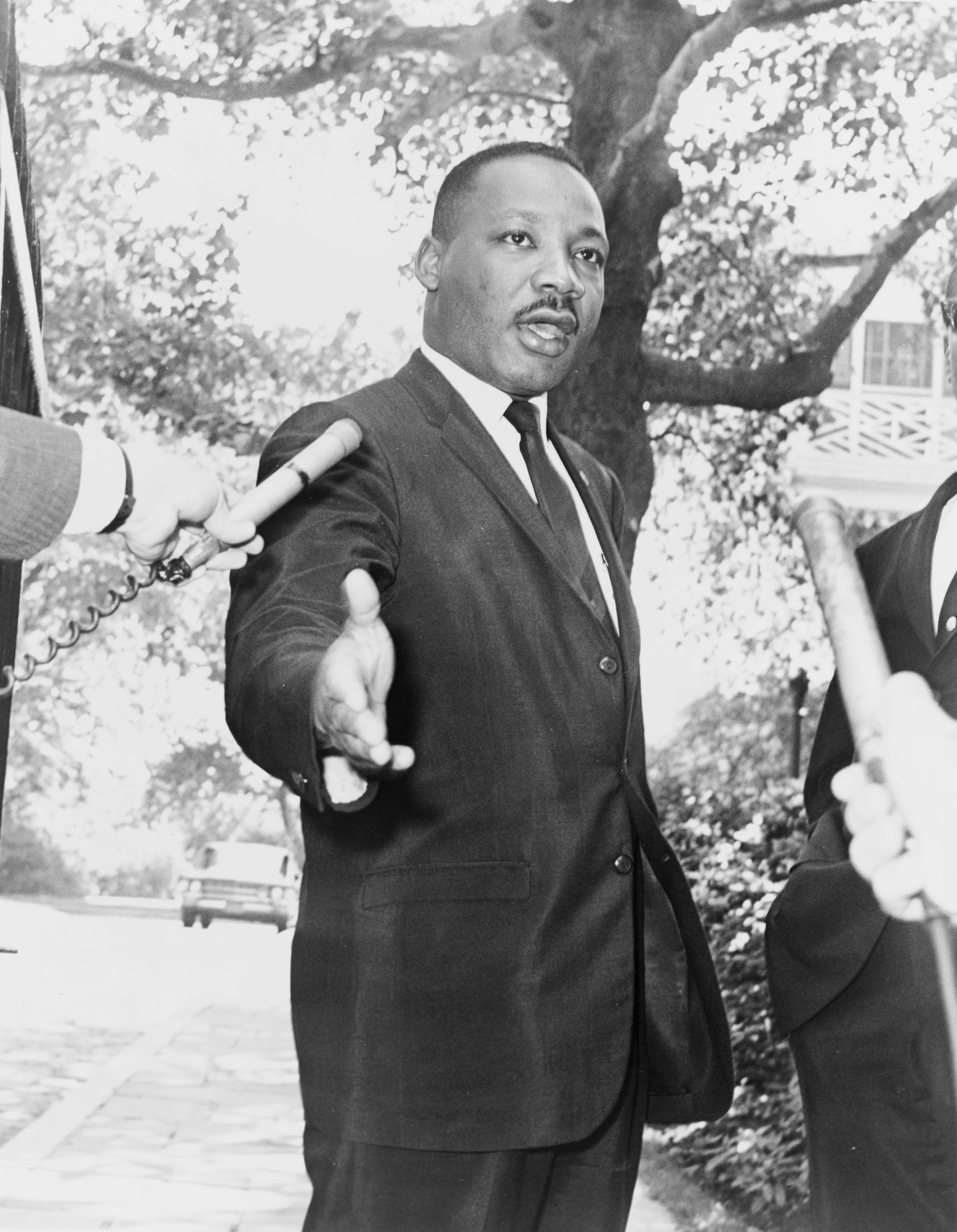
whatsoever. In Strength to Love, Martin Luther
King, jr. addresses the problems that can arise with such an understanding of body
and soul:
By disregarding the fact that the gospel deals with man’s body as well as with his soul, such a one-sided emphasis creates a tragic dichotomy between the sacred and the secular. To be worthy of its New Testament origin, the church must seek to transform both individual lives and the social situation that brings to many people anguish of spirit and cruel bondage.
This issue, identified by King above, is why Benedict offers
the following criticism
to the sentiment espoused by Ryan: “We cannot ignore the fact that some currents
of modern culture, built upon rationalist and individualist economic
principles, have cut off the concept of justice from its transcendent roots,
detaching it from charity and solidarity.”
 So we understand that the Via Media is neither an overreaching government nor a minimalistic
government. Christians should view Church and State each as necessary
components in addressing the needs of the poor. This is true because the state
is indeed the necessary institution to carry out certain forms of justice. The
German martyr and theologian Dietrich Bonhoeffer expressed this balance
properly when he chastised the silence of many Christians during the Nazi
regime by stating:
“Only he who cries out for the Jews may also sing Gregorian [chant].”
So we understand that the Via Media is neither an overreaching government nor a minimalistic
government. Christians should view Church and State each as necessary
components in addressing the needs of the poor. This is true because the state
is indeed the necessary institution to carry out certain forms of justice. The
German martyr and theologian Dietrich Bonhoeffer expressed this balance
properly when he chastised the silence of many Christians during the Nazi
regime by stating:
“Only he who cries out for the Jews may also sing Gregorian [chant].”  Perhaps, there is no better guideline in Scripture on how to be a good Christian than the Parable of the Good Samaritan found in the Gospel of Luke. Jesus tells an inquiring legal expert that he is correct in asserting that love of God and neighbor are what is necessary to inherit eternal life. However, the lawyer, true to his practice, presses the rabbi to elaborate on the word “neighbor” and that is when our Lord tells the tale of a Samaritan having mercy on an injured and abandoned Jew on the Jericho Road. Here we are reminded that love of neighbor extends toward all of humanity.
In STL, King makes an absolutely crucial reflection on this story by stating: “it is not enough to aid a wounded man on the Jericho Road; it is also important to change the conditions that make robbery possible. Philanthropy is commendable, but it must not cause the philanthropist to overlook the systems of economic injustice that make philanthropy necessary.”
As Christians, it is our duty to both help the traveler and fix the road.
